Edge AI architecture for connected devices and industrial equipment
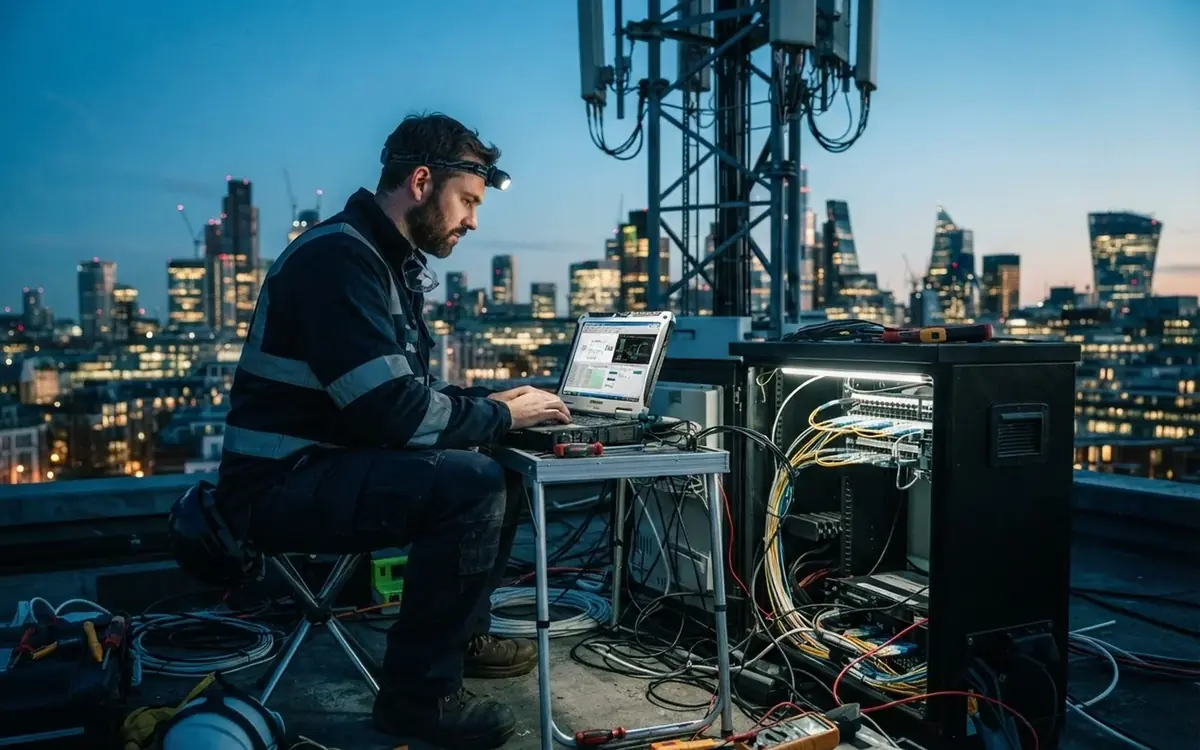
The architecture starts by splitting responsibilities. The device owns anything that has to happen within a bounded time: reading a sensor, running a model, closing a relay. A gateway, where needed, aggregates devices, speaks Modbus or BLE to equipment that cannot reach the internet, and buffers messages. The cloud is the control plane: it issues identities, holds the desired configuration of every device, and keeps the history that fleet-wide analytics need. Vision workloads land on Jetson, where a PyTorch model exported to ONNX and compiled with TensorRT gives edge inference in milliseconds; low-power sensing lands on ESP32-class microcontrollers that sleep between readings; industrial gateways carry the PLC integrations. MQTT topic design, device identity and the store-and-forward queue are fixed before the first dashboard is drawn, because changing them once a thousand devices are in the field is expensive.
How condition monitoring predicts equipment failure from sensor data
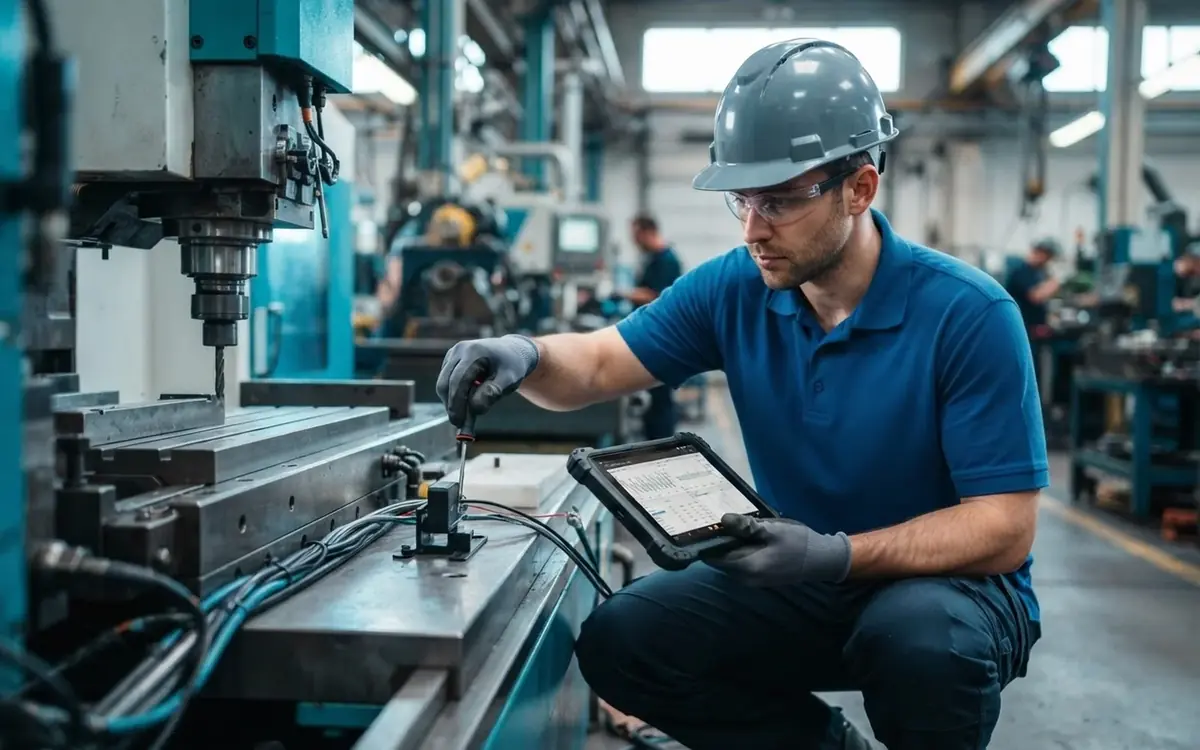
Failures are rare in most plants, which is the awkward truth of predictive maintenance: there is seldom enough labelled history to train a model that recognises a breakdown directly. We therefore start with the behaviour of a healthy machine. Vibration, current draw, temperature and acoustic signals are sampled at the rate the physics demands, often kilohertz for vibration, reduced on the device to features such as spectral bands, RMS and kurtosis, and compared against a baseline learned for that specific asset, not for its model number. Anything that drifts from the baseline raises a score, and the score is tuned against the trade-off a maintenance manager cares about: lead time before failure against false alarms per month, because an alert that cries wolf gets muted. As genuine failures accumulate, supervised models take over for the modes with enough examples.
Keeping a deployed IoT fleet secure, updated and observable
Each device gets its own identity at first boot: a private key generated on the hardware, ideally in a secure element, and a certificate registered with AWS IoT Core or Azure IoT Hub so every connection is mutual TLS and a compromised unit can be revoked without touching the rest. Firmware is built in CI, signed, and released over the air to a canary group before the fleet; devices boot from dual partitions, so a failed update falls back to the previous image on the next restart rather than bricking a unit you cannot reach. A fleet dashboard tracks online rate, message backlog, update success and per-device model confidence, where drift first shows. You keep the build pipeline, the certificate authority and the runbooks in your own accounts, and a retirement procedure that revokes keys when hardware leaves service.