Computer vision pipelines from camera stream to structured events
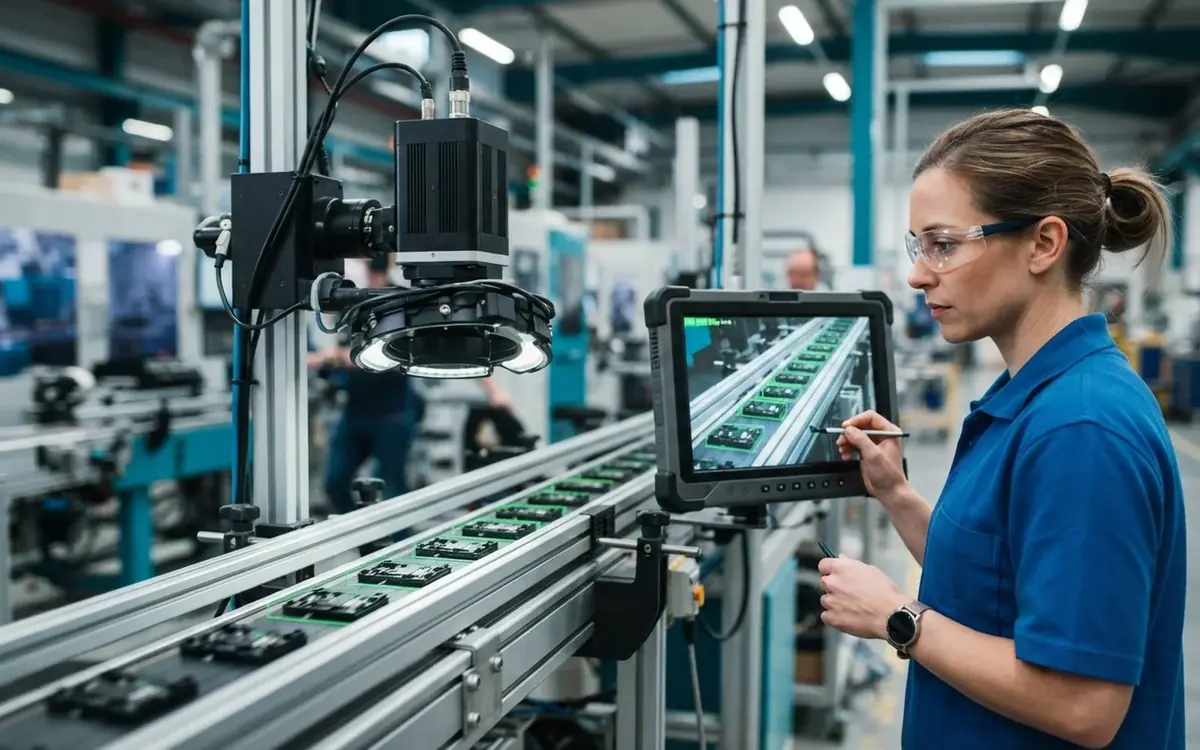
A production computer vision system is a chain in which the model is one link. Frames arrive from CCTV over RTSP or from an upload API, are decoded and resized on the GPU, and pass through a detector such as YOLO or RF-DETR that returns boxes and classes. A tracker associates those boxes across frames so that each person, vehicle or pallet keeps one identity as it moves, which is what makes counting, dwell time and direction of travel possible. Business logic sits on top, a line to cross, a zone to enter, a reading to compare against a tolerance. For documents the chain swaps the detector for layout analysis and PaddleOCR or Tesseract. The output is never video but events, written to a database and pushed to your systems through FastAPI. CrowdIQ and PadelIQ run on this same chain.
Training custom vision models on your own footage and edge cases
The choice is rarely between a pre-trained model and a custom one; it is how much of your own data to add and where. A model trained on public datasets already knows what a person or a forklift looks like. What it does not know is your camera height, your lighting at dusk, the dust on a factory lens or the clothing worn in your region, which is where accuracy collapses. The first weeks go into sampling frames across every camera, time of day and season, labelling the cases that matter to you, and holding out a test set from cameras the model never trained on. We report precision and recall per class on that set and translate them into the numbers you run on, missed defects per shift or false alarms per hour.
Real-time vision inference on edge devices or cloud GPUs
Three numbers decide where an image recognition model runs, the frame rate the use case needs, the bandwidth available and the cost of sending video off site. A dozen warehouse cameras are usually served by a Jetson-class device in the comms room, which keeps footage on the premises and sends only events, while hundreds of streams justify a central GPU server where one card batches many feeds. Either way the model is exported to ONNX and compiled with TensorRT, often at FP16 or INT8 precision, which multiplies throughput with an accuracy loss we measure rather than assume. We watch the confidence distribution of detections per camera, because a drop means a knocked lens, a failed light or a changed scene, and hard examples go back into the next training round. You own the weights, the training code and the pipeline.